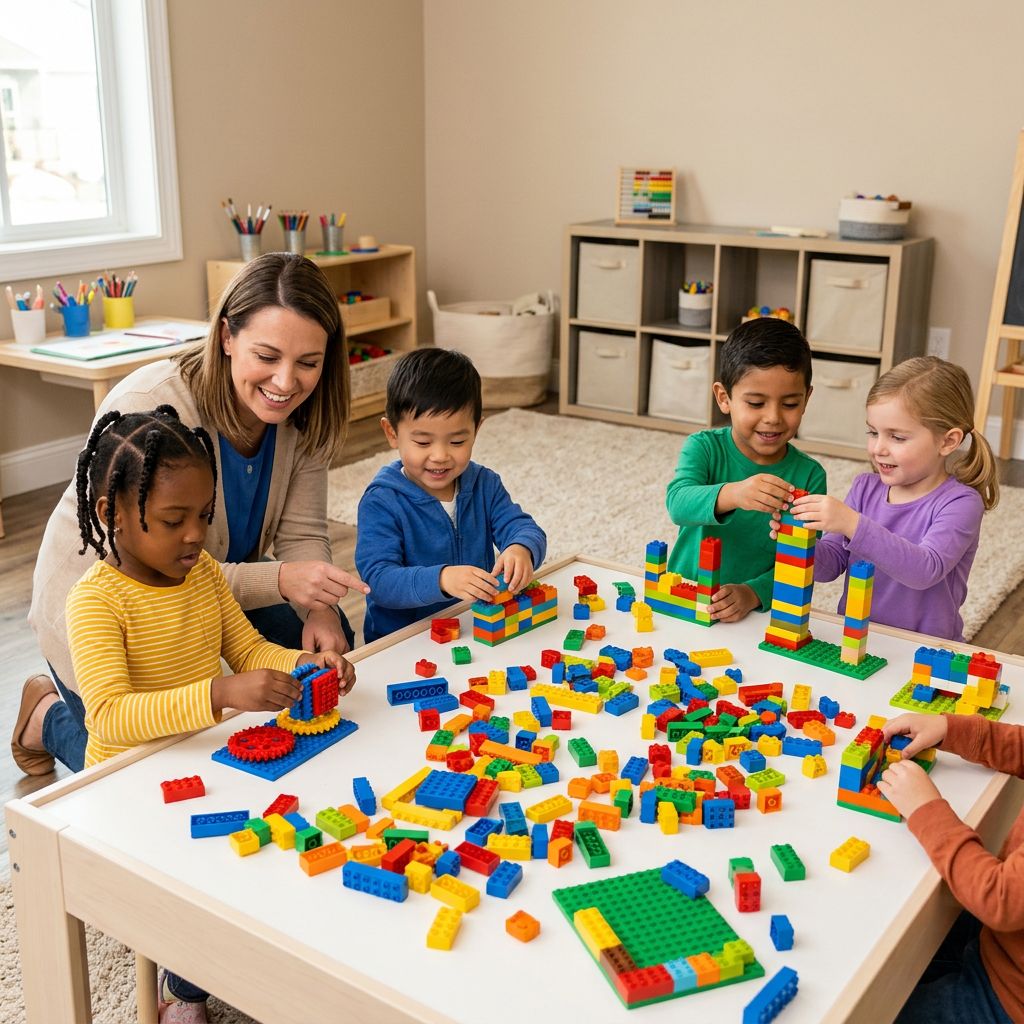
Source : AI Generated Image
Alt Text : Preschool children learning through hands-on STEM and guided play in a screen-light classroom environment
As AI and digital learning tools become more common in schools, many Singapore parents are starting to ask an important question: how much technology is actually appropriate for preschool children? While AI can support certain areas of learning, young children still develop best through movement, conversation, play, and hands-on exploration. The early years are not just about learning information — they are about building the thinking, communication, and problem-solving foundations that children will use for the rest of their lives.
Quick Summary
- AI tools are entering preschools quickly, but developmental science supports physical exploration for ages 4 to 7.
- Children build their strongest cognitive foundations through movement, conversation, and tactile problem-solving.
- Screen time should be purposeful, limited, and balanced with social experiences.
- The best early STEM programmes build spatial reasoning before introducing digital tools.
- Hands-on, play-based learning today is the most direct pathway to coding and robotics readiness tomorrow.
What Is AI in Preschool Education?
Artificial Intelligence (AI) in early years settings refers to digital tools like adaptive apps and voice assistants used to support classroom learning. However, using these tools differs entirely from building genuine future literacy, which requires developing foundational thinking skills rather than just tapping screens.
It helps to remember that true technological readiness begins long before a child ever touches a keyboard.
How AI Tools Are Used in Classrooms
When you look inside modern classrooms, you will notice various digital platforms being introduced to young learners. These solutions aim to streamline teaching but often vary in their developmental value.
- Adaptive applications: Software that adjusts difficulty based on a child’s responses to questions.
- Voice assistants: Smart speakers used for storytelling, answering queries, and vocabulary building.
- Tracking dashboards: Systems that monitor engagement and flag learning patterns for teachers.
- Smart screens: Interactive tablets embedded into daily routines as AI learning tools for children.
While preschool AI tools Singapore classrooms use can track basic progress, they cannot replace the nuanced guidance of a skilled educator.
AI as a Tool vs. AI as a Skill
Understanding the distinction between consuming technology and understanding it is crucial. Many parents wonder is AI appropriate for preschoolers without realising that usage does not equal comprehension.
| Concept | What It Means | What It Requires | Best Age to Introduce |
|---|---|---|---|
| Classroom Tool | Interacting with software to complete a task | Passive engagement and basic screen navigation | Ages 4 to 7 (with limits) |
| Future Skill | Building thinking skills to understand systems | Logical thinking, sequencing, and problem-solving | Ages 8 and above |
For young children, the priority must be developing cognitive skills rather than simply operating software applications.
Is AI Learning Right for Preschool Children?
Technology can support learning when used carefully and in moderation, but preschool-aged children are still in a stage where physical interaction and real-world experiences matter most. Most child development experts agree that young children learn best through active exploration, conversation, movement, and play rather than long periods of screen-based instruction.
What Developmental Science Tells Us
Children aged 3 to 6 are in a critical period for building language, emotional regulation, and logical thinking. These abilities are most effectively built through physical, social, and sensory experiences, rather than screen-based instruction. The Organisation for Economic Co-operation and Development (OECD) and other educational bodies consistently show that face-to-face interaction outperforms digital tools for under-sevens.
When looking at AI and child development, the research is clear. Quality teacher-child interaction is the single strongest predictor of positive developmental outcomes, far outperforming any curriculum content or technology use. This means cognitive development preschoolers experience is heavily reliant on human connection.
WHO and ECDA Screen Time Guidelines
Health and educational authorities provide clear boundaries for technology use in the early years. These guidelines help families maintain a healthy balance.
- World Health Organization limits: The WHO screen time guidelines children follow recommend no more than one hour of sedentary screen use per day for ages 3 to 4.
- Local frameworks: The Early Childhood Development Agency (ECDA) positions technology as one of many learning tools, not a primary instructional method.
- Purposeful engagement: Any screen time preschool children receive should be supervised and balanced with physical activity.
- Supervision necessity: ECDA technology guidelines emphasize that digital engagement must supplement, not replace, human interaction.
The Risk of Introducing AI Too Early
Over-reliance on adaptive learning platforms can inadvertently reduce the quality of human interaction. Passive engagement with these platforms does not build the communication and creativity skills that young learners need most. The concern is not the technology itself, but the displacement of irreplaceable physical and social experiences.
The concern is not AI itself, but whether too much screen-based learning replaces important childhood experiences like physical play, conversation, creativity, and social interaction.
How Young Children Actually Learn Best
Young learners absorb information most effectively through their bodies, using movement, touch, and physical manipulation to build neural pathways. These tangible experiences foster the attention, persistence, and emotional regulation needed for all future academic success.
Many parents notice that a child building a tower concentrates far longer than a child watching a fast-paced video.
Movement, Play, and Physical Exploration
Preschool-aged children learn through their bodies first. Movement, touch, and physical manipulation build neural pathways that abstract digital instruction simply cannot replicate. Unstructured and guided play builds persistence, emotional regulation, and social skills simultaneously.
This is why physical play cognitive development is so closely linked to future academic performance. Engaging in play-based learning Singapore style means finding programmes where children spend the majority of their time building and moving. True creativity and play preschool environments prioritise tangible materials over screens.
Why Conversation Builds Stronger Brains
Children learn language, communication, and emotional understanding best through real conversations with parents, teachers, and friends. These interactions help children ask questions, express ideas, and develop confidence in ways that screens cannot fully replace.
A child asking a teacher why a gear turns the other way receives a much richer response than an app can provide. High-quality teacher child interaction preschool settings offer is essential for growth. This social interaction preschool learning provides forms the basis for empathy and collaborative problem-solving.
Creativity and Hands-On Problem-Solving
Physical construction activities build creative confidence and the willingness to try, fail, and try again in a tangible environment. Problem-solving through physical objects develops flexible thinking and cause-and-effect reasoning. These dispositions are the true precursors to computational thinking and engineering design.
Children who build physically before they code digitally develop stronger intuitions about how systems work. Finding quality hands-on STEM preschool Singapore programmes is vital. These environments nurture the foundational STEM skills children need to thrive later in life.
How Hands-On Learning Builds STEM Foundations
Tangible construction activities directly cultivate the sequencing, pattern recognition, and logical thinking that underpin all future computational tasks. Building physically before coding digitally gives children a profound cognitive head start.
Spatial Reasoning: The Gateway to STEM
The ability to visualise and manipulate objects in space is one of the strongest predictors of later success in Science, Technology, Engineering, and Mathematics (STEM). Physical construction activities such as block building and puzzle-solving in early childhood are the most effective way to develop this ability. This creates compounding cognitive advantages that persist through primary school.
Research indicates that spatial reasoning early childhood activities lead to significantly better mathematics performance. Using building blocks spatial reasoning improves naturally through trial and error. These STEM foundations preschool age children build are critical for understanding complex abstract concepts later.
Children who regularly engage in hands-on construction demonstrate noticeably stronger spatial awareness compared to peers with limited physical building experience.
From Building Blocks to Coding Logic
The mental processes used in physical building are identical to those required for future programming tasks.
- Sequencing tasks: Following steps to build a model mirrors the logic needed for coding readiness preschool development.
- Pattern recognition: Identifying how pieces fit together supports preschool coding readiness and algorithmic thinking.
- Cause and effect: Understanding gears and levers gives children a head start in robotics.
- Structured progression: Moving from simple builds to motorised mechanisms creates a seamless learning pathway.
Why Screen-Light Learning Matters at Age 4-7
A screen-light approach deliberately prioritises physical and social experiences over digital device use in the foundational years. This method is not anti-technology, but rather pro-development. It ensures children build the cognitive infrastructure that makes future technology learning more effective.
Fine motor skills and hand-eye coordination developed through tactile problem-solving directly support later keyboard use. Embracing screen-light learning preschool options ensures balanced development. When comparing hands-on learning vs screen learning, the physical approach consistently yields deeper understanding for this age group.
Opportunities and Concerns: A Balanced View
While technology can offer personalised support and track progress, it also carries the risk of displacing crucial physical play and social engagement. A balanced approach evaluates whether a digital tool truly enhances human interaction or merely replaces it.
Where AI Can Add Genuine Value
When used intentionally, specific digital tools can provide targeted benefits in a supervised classroom environment.
- Teacher support: Systems that identify children who may need additional attention or are progressing quickly.
- Vocabulary building: Interactive storytelling applications used in a limited, supervised context.
- Supplemental enrichment: AI adaptive learning preschool software that complements, rather than replaces, physical activities.
- Tailored pacing: Basic personalised learning preschool AI platforms that help educators adjust lesson plans.
- Enriched environments: Selective AI tools early childhood educators use to track engagement patterns.
Real Concerns Parents Should Consider
Despite the potential benefits, early digital adoption presents valid challenges that families must carefully weigh.
- Displacement of play: Screen activities reducing the time available for vital physical and social interaction.
- Reduced conversation: Lower quality of dialogue when devices replace human connection.
- Passive engagement: AI tools vs hands-on learning often results in children consuming content rather than creating it.
- Marketing exaggeration: Vague claims about preschool technology Singapore centres use without proof of developmental outcomes.
Opportunities vs. Concerns: A Quick Comparison
Evaluating the landscape requires looking at both sides of the digital debate objectively. This is a common challenge for AI education Singapore parents face today.
| Area | Opportunity | Concern | Parent Question to Ask |
|---|---|---|---|
| Personalisation | Adjusts to learning pace | Creates passive consumption | Does this replace active problem-solving? |
| Language | Introduces new vocabulary | Reduces human conversation | Is the interaction emotionally responsive? |
| Development | Tracks engagement metrics | Displaces physical play | Does this tool encourage physical movement? |
How to Choose Age-Appropriate STEM Programmes
Selecting the right enrichment requires looking beyond flashy marketing to ensure the curriculum prioritises physical building, social collaboration, and guided exploration. The best options are fully accredited and offer a clear developmental progression.
5 Questions to Ask Before Enrolling
When evaluating options, asking specific questions helps reveal the true nature of the curriculum.
- Physical balance: How much time involves building and moving versus engaging with screens?
- Accreditation: Is it a recognised, age-appropriate STEM programmes provider?
- Progression: Does the curriculum offer a clear pathway from foundational skills to advanced concepts?
- Exploration: How does the centre balance structured learning with creative problem-solving?
- Evidence: Can the provider show genuine developmental outcomes?
Using a preschool STEM checklist parents can filter out purely screen-based options. Choosing preschool STEM programme providers carefully ensures your child receives substantive education.
Green Flags and Red Flags to Watch For
Identifying quality early childhood enrichment Singapore options becomes easier when you know what to observe during a trial visit.
| Evaluation Area | Green Flag (Positive Indicator) | Red Flag (Warning Sign) |
|---|---|---|
| Classroom Activity | Majority of time spent on physical building | Heavy screen use described as AI-powered learning |
| Curriculum Design | Clear progression pathway from ages 4 to 12 | Vague claims without a structured roadmap |
| Student Engagement | Children actively collaborating and problem-solving | Passive consumption and isolated device use |
What a Developmental Progression Should Look Like
A structured learning journey ensures concepts are introduced exactly when a child is ready to grasp them.
- Ages 4 to 5: Foundational cognitive skills built through storytelling, sensory exploration, and simple physical builds.
- Ages 6 to 7: Introduction to gears, mechanisms, and motorised models that establish early STEM skills Singapore curriculums value.
- Ages 8 to 9: Early robotics and structured challenges that encourage systematic thinking.
- Ages 9 and above: Formal coding and automation concepts built on a solid play-based STEM learning foundation.
How Bricks 4 Kidz Builds Future-Ready Foundations
Bricks 4 Kidz programmes are designed around hands-on LEGO® learning, guided exploration, and age-appropriate STEM experiences that help children build confidence and problem-solving skills progressively over time.
Screen-Light Learning at the Core
The Bricks 4 Kidz philosophy prioritises physical LEGO-based construction, guided discovery, and social problem-solving over digital instruction. Every session is designed to maximise the quality of child-to-child and child-to-instructor interaction, which is the most valuable experience for young learners. This creates a highly effective environment for cognitive growth.
Finding an ECDA aligned STEM programme provides independent assurance of developmental quality. For families seeking reliable preschool STEM enrichment Singapore options, this screen-light approach builds scientific curiosity and logical thinking simultaneously without relying on tablets.
A Clear Pathway from Play to AI Readiness
The journey from simple bricks to complex mechanisms is carefully mapped to match cognitive milestones.
- Foundational builds: Ages 4 to 5 focus on spatial reasoning, fine motor skills, and creative confidence through LEGO learning preschool activities.
- Mechanical concepts: Ages 6 to 7 introduce cause-and-effect thinking through gears and motorised models.
- Advanced applications: Ages 8 and above transition into preschool robotics Singapore pathways using Scratch and Micro:bit.
- Meaningful engagement: This pathway ensures AI literacy young children develop is rooted in true comprehension, not passive watching.
Programmes Designed for Every Stage
Consistent, structured enrichment offers multiple ways for children to engage and grow throughout their early years.
- Weekly classes: After-school sessions for ages 4 to 9 with age-appropriate curriculum and small group facilitation.
- Integrated learning: Curriculum-aligned workshops for preschools that support centre themes.
- Family bonding: Parent and child workshops that strengthen shared learning experiences.
- Holiday camps: Themed engineering challenges providing comprehensive preschool enrichment Singapore experiences for ages 5 to 12.
Preparing Your Child for an AI-Driven World
True future-readiness is not about mastering software at age five, but rather cultivating the curiosity, persistence, and logical thinking that make all subsequent learning possible. Strong cognitive roots established early will support any technological skills needed later.
What Future-Readiness Really Means at Age 5
At age five, preparation is about developing the creative confidence and logical thinking that make future learning possible. The Ministry of Education’s expanded curriculum in primary schools assumes children arrive with these strong foundational cognitive skills already in place. The best investment is in rich, varied, hands-on experiences.
Fostering future-ready preschool skills involves patience. The Singapore Smart Nation preschool agenda relies on children who can think critically. True children and AI literacy begins with physical problem-solving, not screen tapping.
Balancing Technology and Childhood Development
The goal is not to shield children from technology, but to sequence their exposure thoughtfully so that digital tools build on strong physical foundations. Children who have developed spatial reasoning through hands-on play are significantly better equipped to engage meaningfully with digital tools later. Parents do not need to choose between a technology-positive future and a sound childhood.
Understanding MOE digital literacy early years expectations helps parents make informed choices. Ensuring proper developmental readiness preschool stages are met means the enrichment choices made today will have compounding positive effects on how a child engages with learning throughout their life.
Start with the Foundations That Last
The conversation around technology in early education is a growing reality, and parents are right to ask questions about it. The most empowering answer is not to fear digital tools or to rush towards them prematurely. Instead, understand that the strongest preparation for an increasingly digital future begins with rich, hands-on, play-based learning in the foundational years.
Technology will continue to shape the future, but strong childhood foundations are still built through movement, conversation, creativity, and hands-on exploration. By giving children opportunities to build, question, experiment, and solve problems in the real world first, parents can help them grow into confident learners who are better prepared for the digital future ahead.
Frequently Asked Questions
Is AI in preschool education safe for young children?
It depends on how it is used. AI tools used as a supplement to hands-on and teacher-led activities, within WHO and ECDA screen time guidelines, can be appropriate. They become a concern when they replace physical play and quality teacher-child interaction.
At what age should children start learning about AI?
Formal AI concepts are best introduced at ages 8 and above, once foundational cognitive skills are established. Before that, children build the thinking skills that underpin AI literacy through hands-on, play-based STEM activities.
How much screen time is appropriate for preschool children?
The WHO recommends no more than one hour of purposeful, supervised screen time per day for children aged 3 to 4. For ages 5 to 7, screen use should always be balanced with significant physical activity, social play, and hands-on learning.
What makes a preschool STEM programme age-appropriate?
An age-appropriate programme prioritises physical building, social collaboration, and guided exploration over screen use. It should be ECDA-aligned, STEM-accredited, and offer a clear developmental progression from foundational skills to advanced STEM concepts.
Does hands-on learning really prepare children for coding and AI?
Yes. Physical construction builds spatial reasoning, logical thinking, and pattern recognition, the same cognitive skills that underpin coding and AI literacy. Children who build physically before they code digitally develop stronger intuitions about how systems work.
How is Bricks 4 Kidz different from other preschool STEM programmes?
Bricks 4 Kidz is STEM-accredited, ECDA and MOE-aligned, and built on a screen-light philosophy that prioritises physical LEGO-based learning. It offers a clear progressive pathway from foundational builds at ages 4 to 5 through to robotics and coding at ages 8 and above.